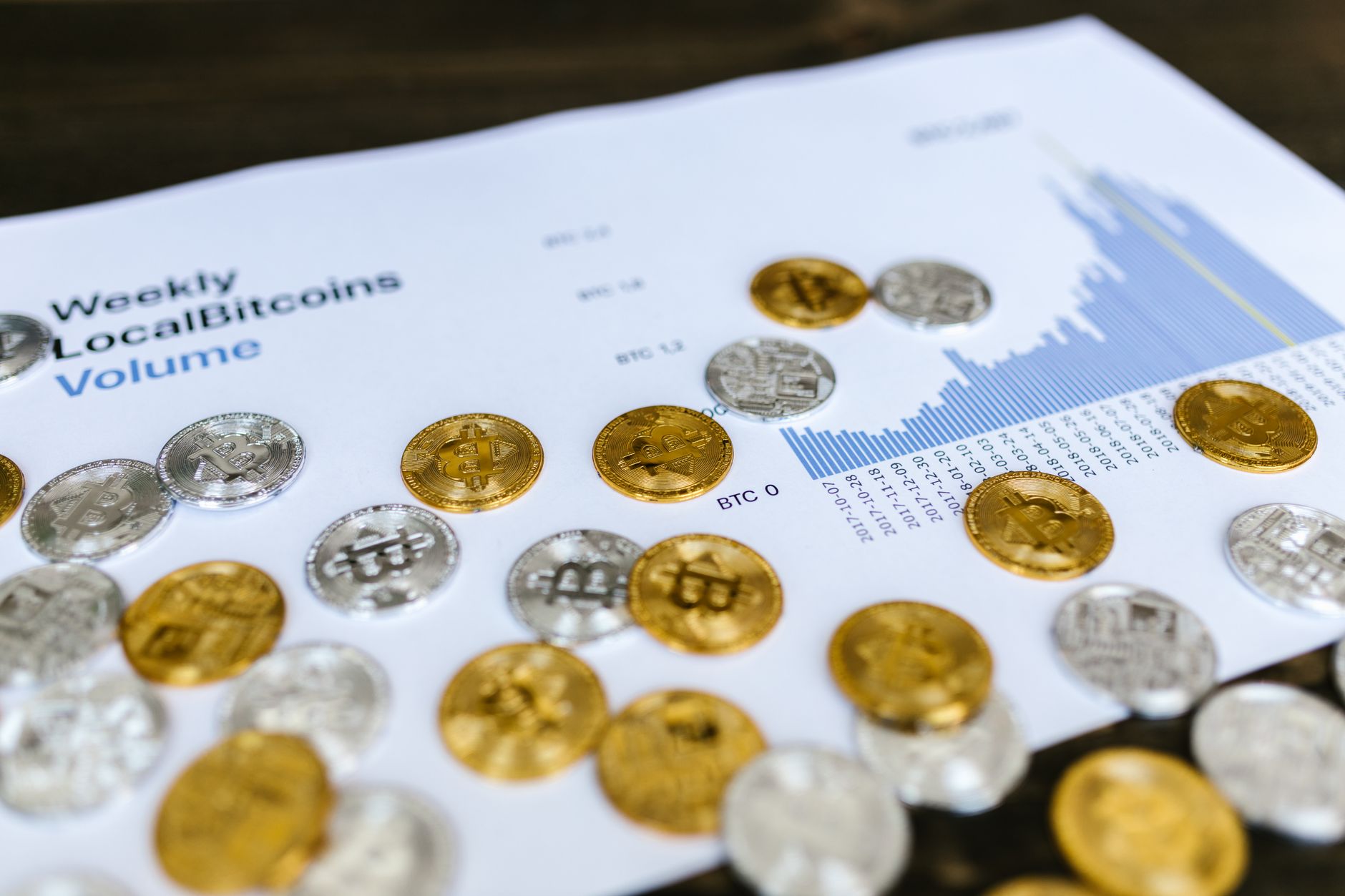
What Is Bitcoin Halving Explained? A Complete Explanation
Bitcoin halving is an automatic mechanism built into Bitcoin's code that reduces the reward miners receive for validating transactions and creating new blocks on the network. Every 210,000 blocks—approximately every four years—the amount of newly created Bitcoin issued per block is cut in half. Think of it like a scheduled pay cut for workers maintaining a company: their compensation drops overnight, but their job requirements stay the same.
When Bitcoin launched in 2009, miners earned 50 new Bitcoin for each block they validated. At the first halving in 2012, this dropped to 25 Bitcoin per block. The second halving in 2016 reduced it to 12.5 Bitcoin, and the third in 2020 brought it to 6.25 Bitcoin. This continues indefinitely until sometime around 2140, when the last Bitcoin will theoretically be mined, and the supply reaches its hard cap of 21 million coins. No government, institution, or individual controls this process—it happens automatically in the code itself.
Halving matters because Bitcoin is designed with intentional scarcity. Unlike government-issued money that central banks can print endlessly, Bitcoin's total supply is mathematically fixed and finite. This predictable reduction in new supply is meant to preserve the cryptocurrency's value over time by making it increasingly rare as adoption grows.
How It Works — Step by Step
Understanding Bitcoin halving requires knowing how Bitcoin mining operates. Miners are specialized computers running software that competes to solve complex mathematical puzzles. The first miner to solve the puzzle gets to add a new block of transactions to the blockchain and receives a reward: newly created Bitcoin plus transaction fees.
The halving process itself is entirely automatic and predetermined:
- Every 2,016 blocks, the network adjusts mining difficulty to maintain a consistent 10-minute average block time
- At block 210,000, then 420,000, then 630,000, and so on, the block reward automatically cuts in half through the code
- Miners continue validating transactions identically—the only change is their compensation shrinks
- Transaction fees become a larger portion of miner income as block rewards diminish
- The network difficulty often adjusts downward temporarily because less total computational power is economically viable at lower rewards
The next halving is expected to occur around April 2028, based on typical block production rates. This schedule is so reliable that the exact block number—not a calendar date—triggers the event.
Why It Matters in 2026
The 2024 Bitcoin halving occurred in April, roughly 18 months before this guide's publication date. Historically, halvings have created measurable market cycles: Bitcoin's price tends to rise significantly in the 12-18 months following a halving event, as reduced supply meets sustained or growing demand. The 2020 halving preceded Bitcoin reaching $69,000 in late 2021. The 2016 halving preceded the 2017 bull run to $20,000.
In 2026, the market consequences of the 2024 halving are unfolding. Institutional adoption has grown substantially—major corporations, pension funds, and investment vehicles now hold Bitcoin. The U.S. Bitcoin ETFs launched in January 2024 dramatically increased accessibility for regular investors, funneling billions into Bitcoin holdings. These structural changes mean halving cycles may operate differently than in earlier eras when the market was smaller and more speculative.
Miners face genuine pressure in 2026 as their block rewards have shrunk to 6.25 Bitcoin, making operational costs—electricity, hardware, facilities—a larger percentage of revenue. Only efficient mining operations survive, which could concentrate mining power and shift where Bitcoin mining occurs globally. This has regulatory and environmental implications worth monitoring.
The Key Facts Everyone Should Know
- Bitcoin's total supply is capped at exactly 21 million coins, mathematically encoded in the protocol
- The first halving occurred at block 210,000 in November 2012, reducing the reward from 50 to 25 Bitcoin
- The third halving in May 2020 reduced the reward to 6.25 Bitcoin per block (approximately every 10 minutes)
- As of 2026, approximately 21.4 million Bitcoin have been mined, meaning roughly 99.8% of all Bitcoin that will ever exist has already entered circulation
- The next halving is projected for April 2028, reducing rewards to 3.125 Bitcoin per block
- Transaction fees will eventually become miners' primary income source, as block rewards approach zero by 2140
- Approximately 1.7 million Bitcoin have been lost or destroyed permanently, reducing the actual available supply below the theoretical 21 million maximum
- Bitcoin's price has historically increased an average of 140